 Pin This
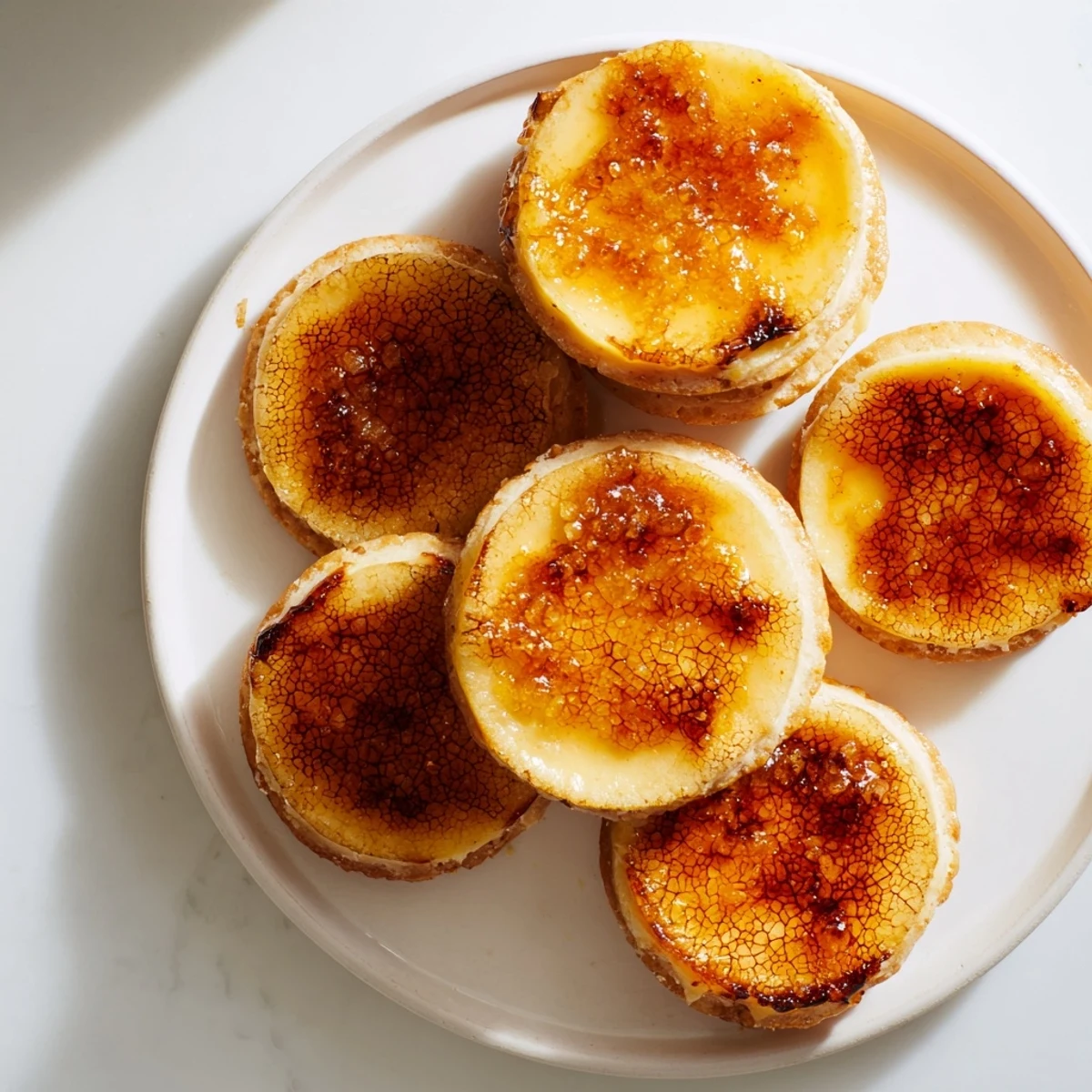
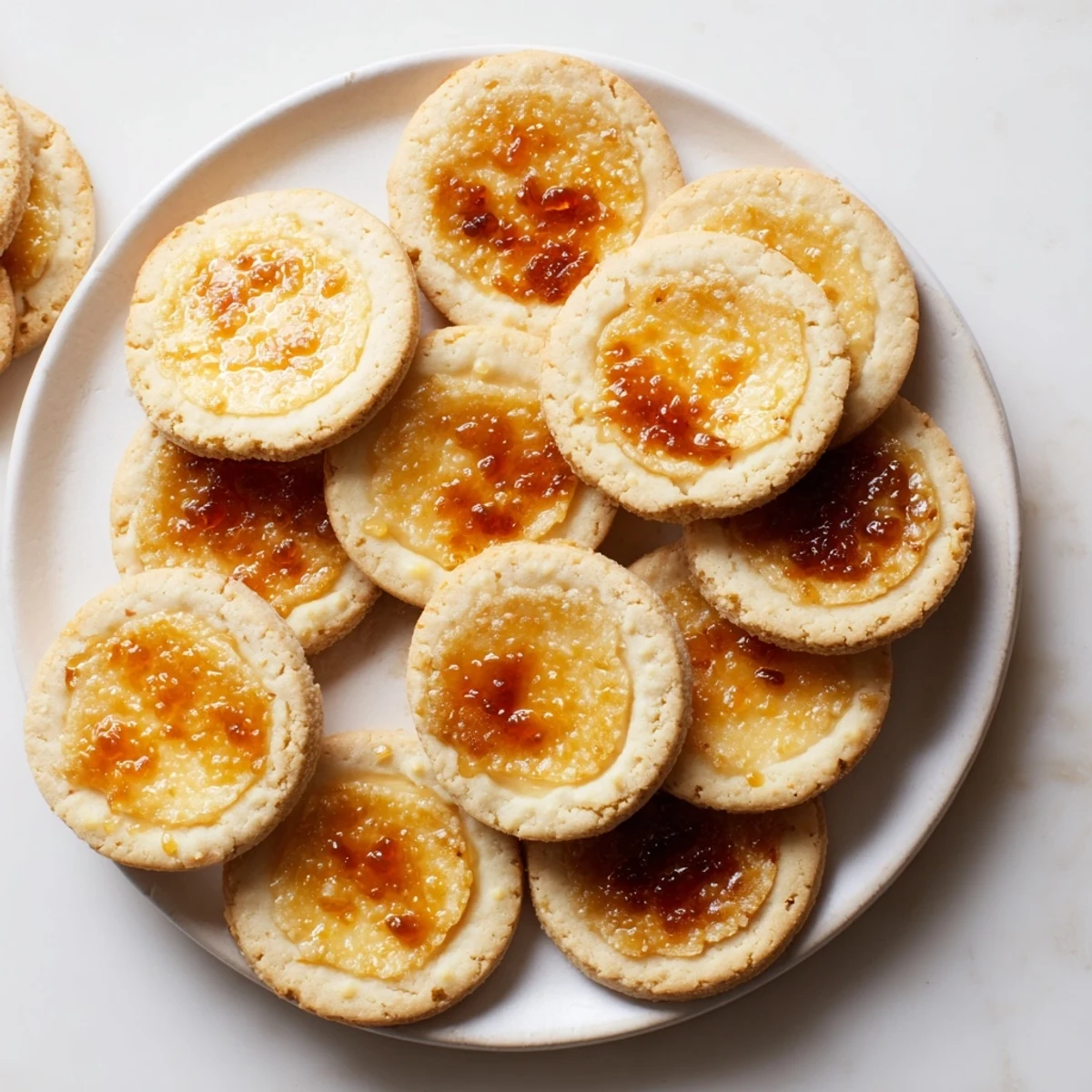
 Experience the luxurious combination of tender buttery shortbread crowned with velvety vanilla custard and a signature crackled caramelized sugar crust. Each bite delivers contrasting textures—crisp edges, creamy center, and that signature burnt-sugar snap that makes crème brûlée irresistible.
The dough comes together quickly with pantry staples, though the chilling step ensures perfectly shaped rounds. After baking, a simple custard adds richness before the dramatic torching creates that signature glass-like caramelized finish. Best served at room temperature when the sugar has set into that satisfying crackle.
The smell of sugar hitting heat still makes me pause, no matter how many times I've done it. I first attempted these little cookies during a dinner party phase where I insisted on making everything from scratch, including the garnishes. My husband wandered into the kitchen when I was torching the first batch, drawn by that distinctive caramelized sugar aroma like a moth to flame. Now they're his most requested dessert, though I think he mostly just wants to watch the sugar crack under his spoon.
My sister came over last winter with a kitchen torch she'd bought on a whim and nowhere to use it. We spent the entire afternoon testing these cookies, debating whether thicker sugar layers cracked better or if the custard needed more vanilla bean paste. The kitchen was filled with burnt sugar mistakes and laughter, and honestly, some of those imperfect batches tasted just as wonderful as the picture-perfect ones.
Ingredients
- Unsalted butter: Room temperature is non-negotiable here. I've tried softening it in the microwave and the dough never quite achieves that proper shortbread texture.
- Powdered sugar: This creates a more tender crumb than granulated sugar would. Don't swap it out or you'll lose that melt-in-your-mouth quality.
- All-purpose flour: Sifting it first prevents those frustrating dry pockets in your dough. I learned this the hard way with a batch that had to be rebaked.
- Heavy cream: The higher fat content makes all the difference in the custard. I've tried half-and-half in a pinch but it never sets up quite right.
- Egg yolks: Save the whites for a meringue or breakfast scramble. The yolks provide all the richness and structure needed.
- Vanilla bean paste: Those tiny flecks of vanilla bean make these cookies feel so special. Pure extract works too but the visual impact of paste is worth the splurge.
Instructions
- Prepare the buttery foundation:
- Beat that room-temperature butter and powdered sugar until it's lighter than air and looks like tiny clouds formed in your bowl. I've found this step needs a full 4 minutes of beating to achieve the proper texture.
- Bring the dough together:
- Sift your flour and salt right into the butter mixture, folding it gently until it just comes together. Don't overwork it or the gluten will develop and you'll lose that tender crumb we're after.
- Let the dough rest:
- Shape the dough into logs about 2 inches across, wrap them tightly, and let them chill for at least 30 minutes. This resting period helps the flour hydrate and prevents spreading in the oven.
- Shape and bake:
- Slice your chilled dough into rounds and bake until the edges barely turn golden, about 12 to 14 minutes. They'll still look pale in the center but that's exactly what you want.
- Make the quick custard:
- Whisk the yolks, sugar, cream, and vanilla over medium-low heat, stirring without stopping until it thickens slightly. I set a timer for 4 minutes because it goes from perfect to scrambled eggs in seconds.
- Assemble and torch:
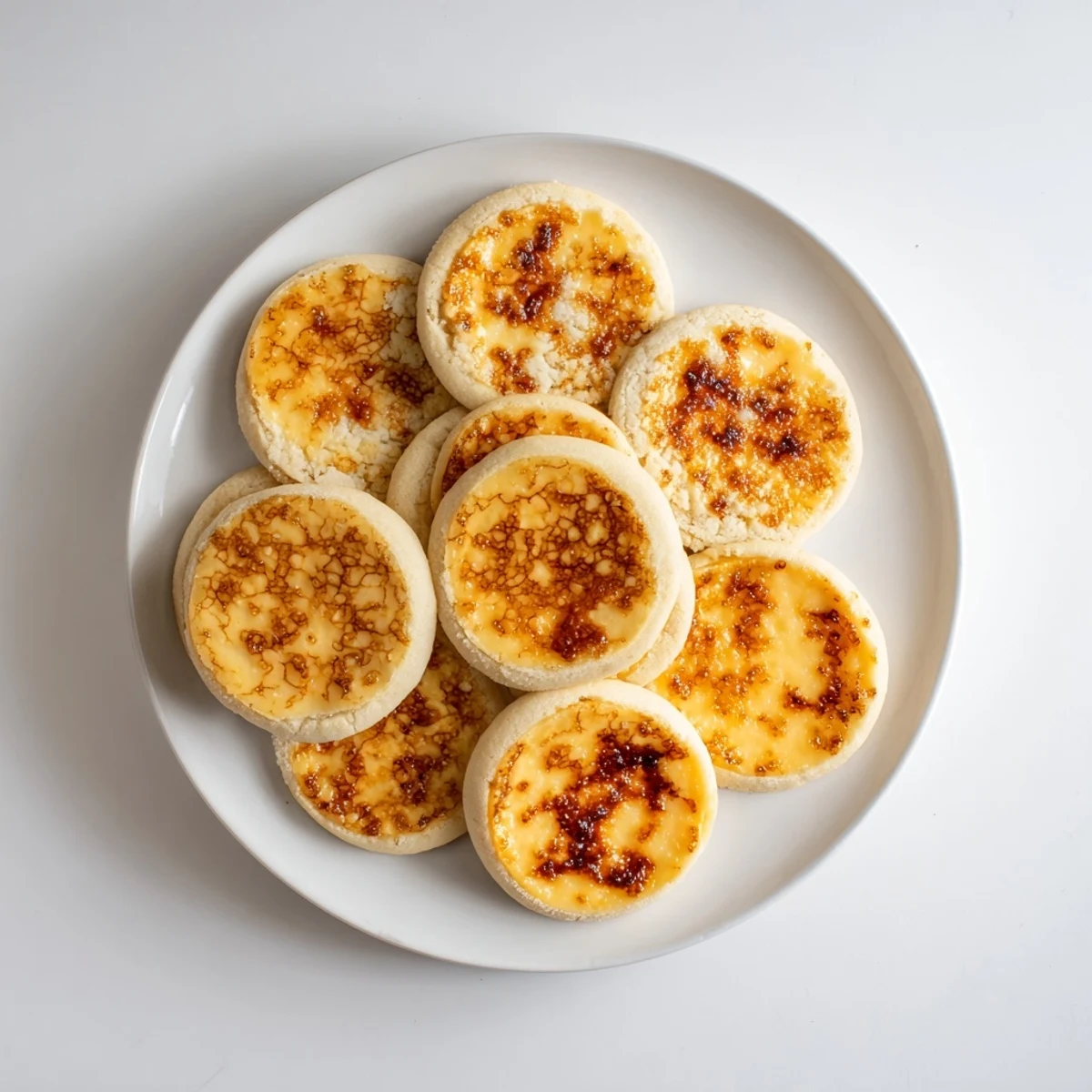
- Spoon a dollop of cooled custard onto each cookie, sprinkle sugar over the top, and torch until it turns deep golden brown. Let them set for 5 minutes so that sugar layer can get properly crispy.
 Pin This
 Last summer my neighbor smelled the caramelizing sugar from her backyard and knocked on the door to investigate. We ended up sitting on my porch with fresh coffee and a plate of these warm cookies, watching the fireflies come out while she told me about her grandmother's crème brûlée recipe. Food has a way of bringing people together that nothing else quite does.
Getting the Perfect Torch Effect
I used to hold the torch too close and end up with burnt spots and raw patches in between. Now I keep it about 3 inches away, moving in small circles until the sugar melts evenly into that amber glass we're looking for. The sound of sugar caramelizing is this subtle crackling that I've grown to love almost as much as the taste itself.
Making Them Ahead
The dough logs freeze beautifully for up to a month, which means you can have fresh-baked shortbread at a moment's notice. I slice and bake them straight from frozen, adding maybe 2 minutes to the baking time. The custard can also be made a day ahead and kept chilled, then just bring everything together right before serving.
Serving Suggestions
These feel most special when plated individually, perhaps with a few fresh berries or a scoop of vanilla ice cream alongside. I've also served them as part of a dessert spread with macarons and chocolate truffles, where they held their own as the crowning jewel. They're rich enough that one per person is usually sufficient.
- A dessert wine like Sauternes or late-harvest Riesling pairs beautifully
- Strong black coffee cuts through the richness and balances the sweetness
- They're equally lovely with afternoon tea, especially Earl Grey
 Pin This
 There's something deeply satisfying about hearing that first crack of sugar against your spoon. These cookies remind me why I fell in love with baking in the first place.
Recipe FAQs
- → Can I make these without a kitchen torch?
-
Yes, you can caramelize the sugar under your oven's broiler. Watch closely as it takes only 1–2 minutes—move the rack to the upper position and rotate the pan for even browning.
- → How long do these stay fresh?
-
Store in an airtight container in the refrigerator for up to 5 days. The caramelized sugar softens over time but flavors remain delicious. Bring to room temperature before serving.
- → Can I freeze the dough?
-
Absolutely. Wrap the chilled dough logs tightly in plastic and freeze for up to 3 months. Thaw in the refrigerator overnight before slicing and baking.
- → What sugar works best for the topping?
-
Regular granulated sugar melts smoothly. Turbinado or raw sugar creates extra crunch and deeper flavor due to larger crystals and molasses content.
- → Why did my custard curdle?
-
Curdling occurs from overheating. Keep the temperature at medium-low and stir constantly—remove from heat once thickened enough to coat the back of a spoon.
- → Can I use salted butter?
-
You can, but reduce the added salt to 1/8 teaspoon. Unsalted butter allows better control over the final flavor balance in these delicate treats.